Visual Field Guide
See how power moves
These diagrams translate the Five Gates framework into practical maps for examining information, access, money, legitimacy, infrastructure, gate conversion, dashboard inequality, and repair.
They are analytical tools, not universal proof. Their purpose is to help readers ask clearer questions about power, evidence, accountability, and durable change.
Featured diagram
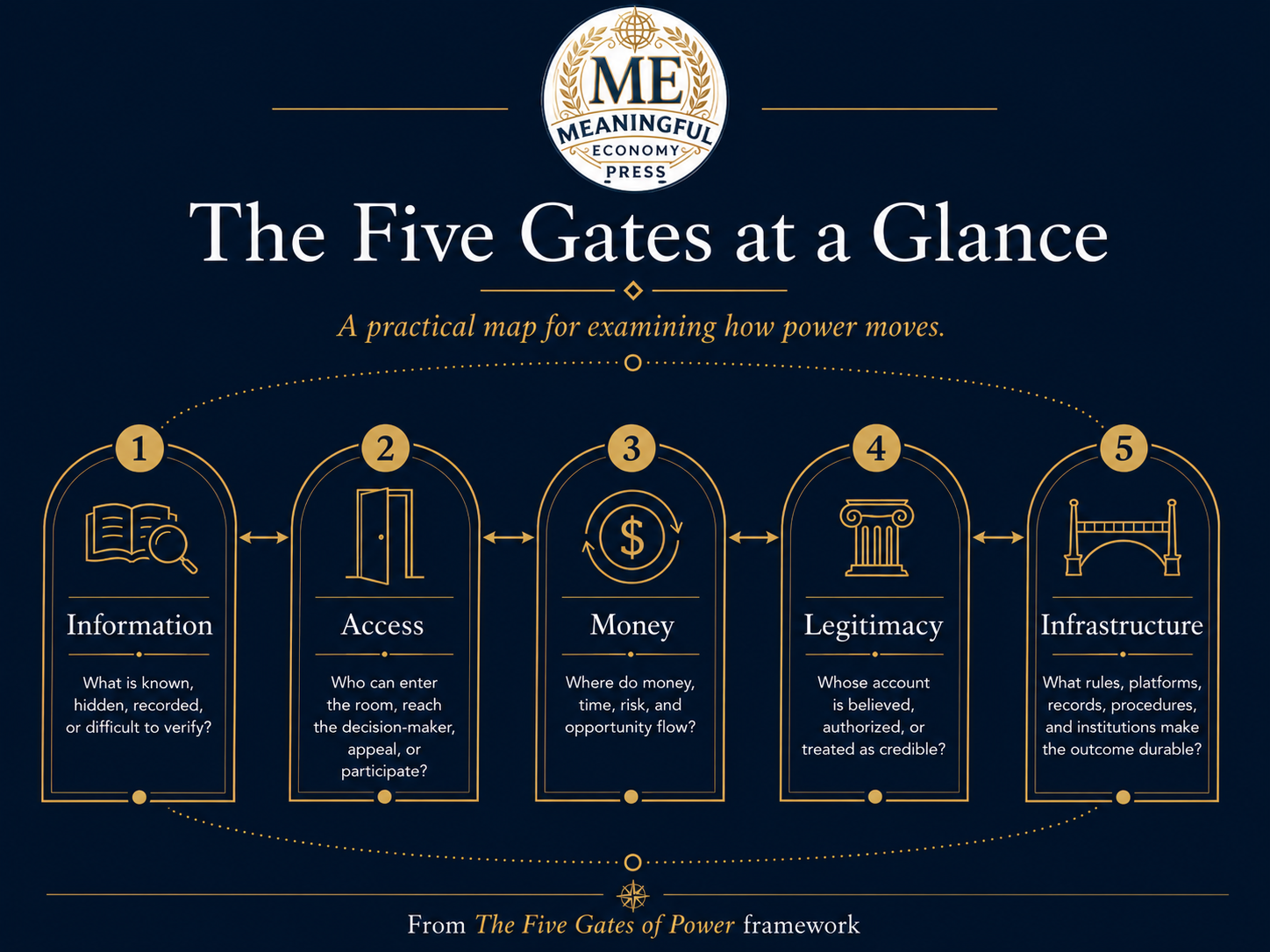
The Five Gates at a Glance
Information, access, money, legitimacy, and infrastructure are distinct gates, but they rarely operate alone. The analytical task is to identify which gate is most active, what is converting into what, who benefits, who is excluded, and what becomes durable.
From the Five Gates of Power framework.
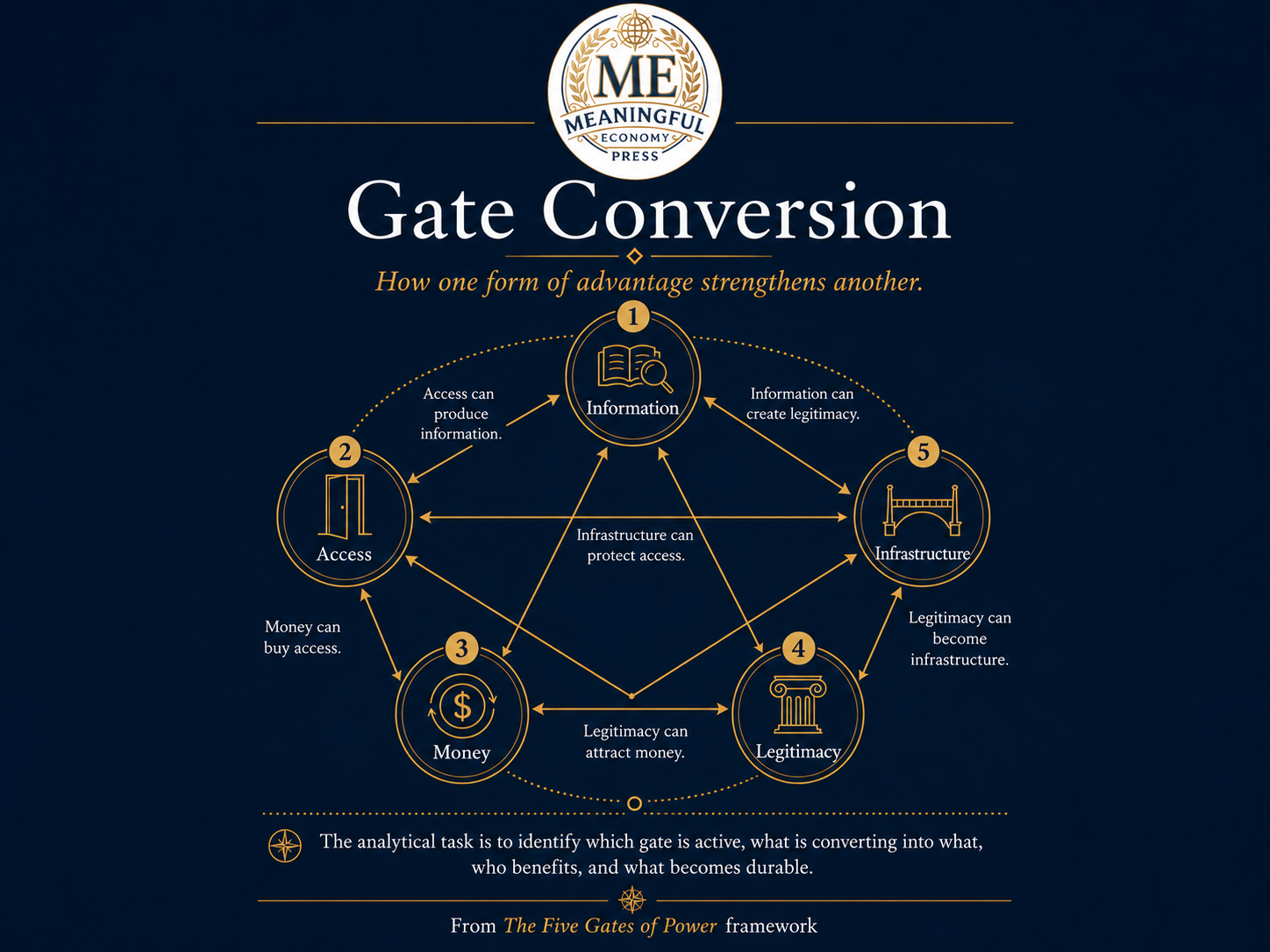
Diagram 2
Gate Conversion
One gate can strengthen another. Money may purchase access; access may produce information; information may create legitimacy; legitimacy may become embedded in infrastructure.
From the Five Gates of Power framework.
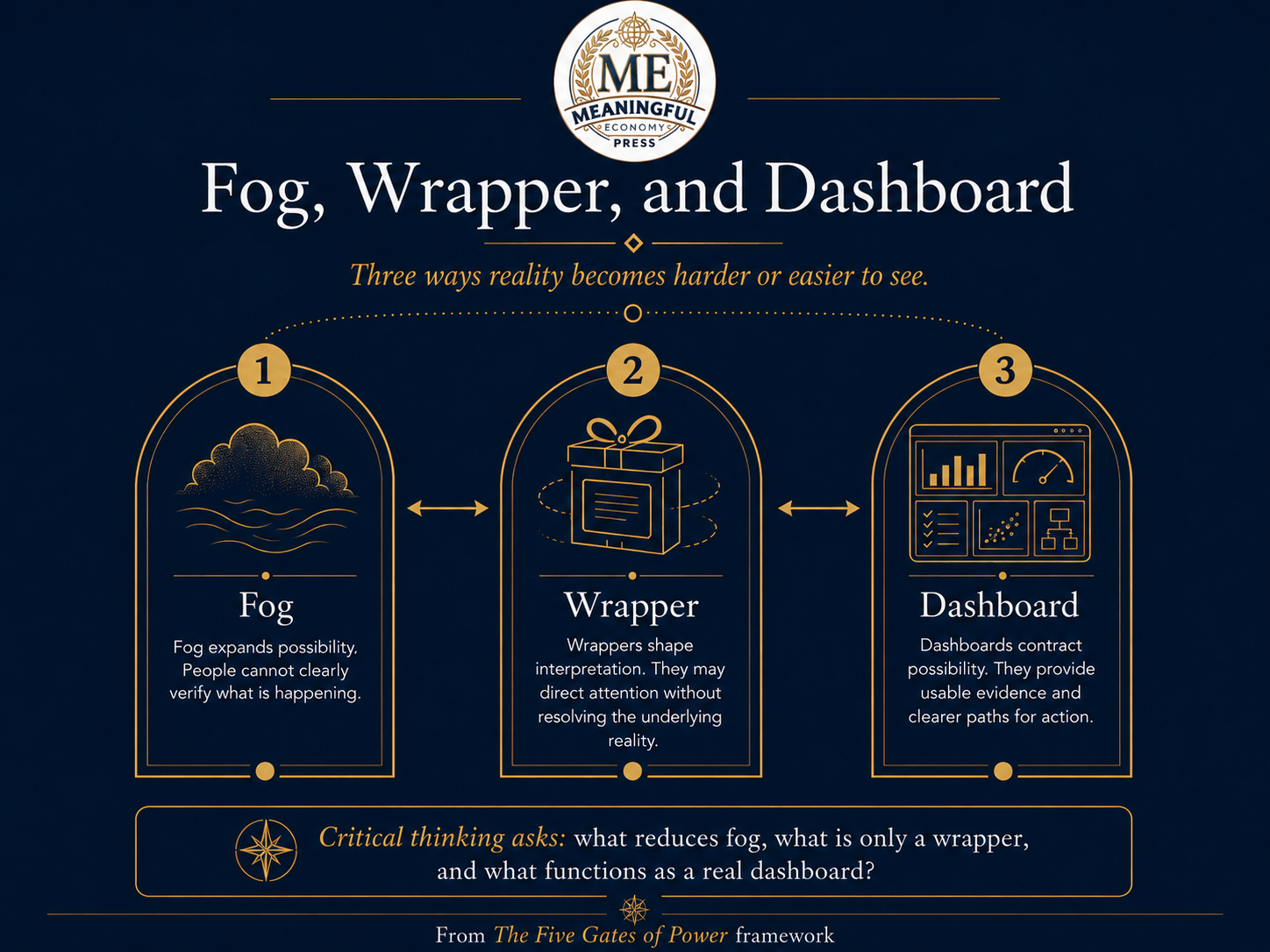
Diagram 3
Fog, Wrapper, and Dashboard
Fog expands the field of possibility. Wrappers shape interpretation. Dashboards provide records, probabilities, decision paths, and ways to test what is actually happening.
From the Five Gates of Power framework.
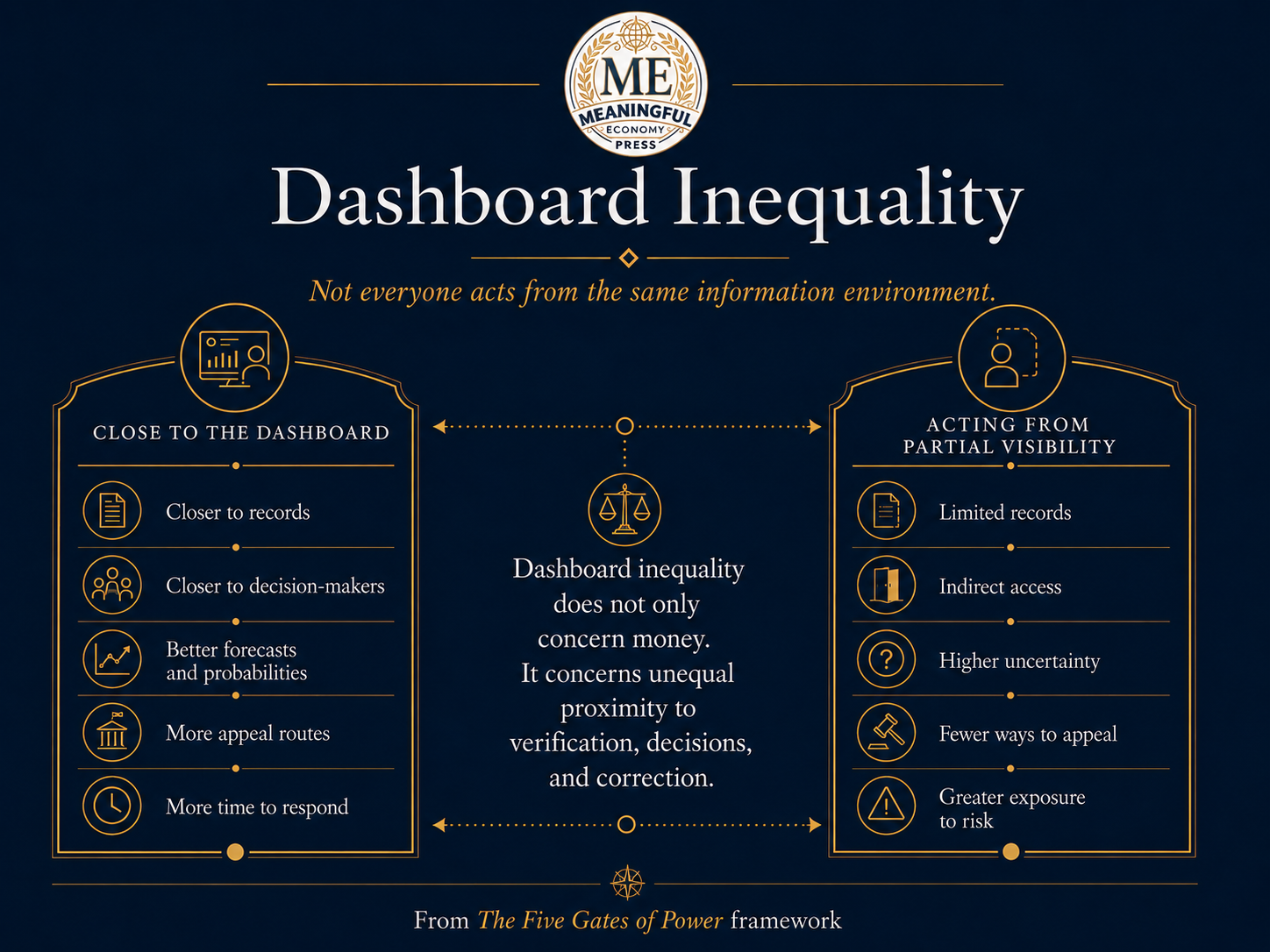
Diagram 4
Dashboard Inequality
People do not always act from the same information environment. Some remain close to records, forecasts, decisions, and appeals, while others must act under uncertainty.
From the Five Gates of Power framework.
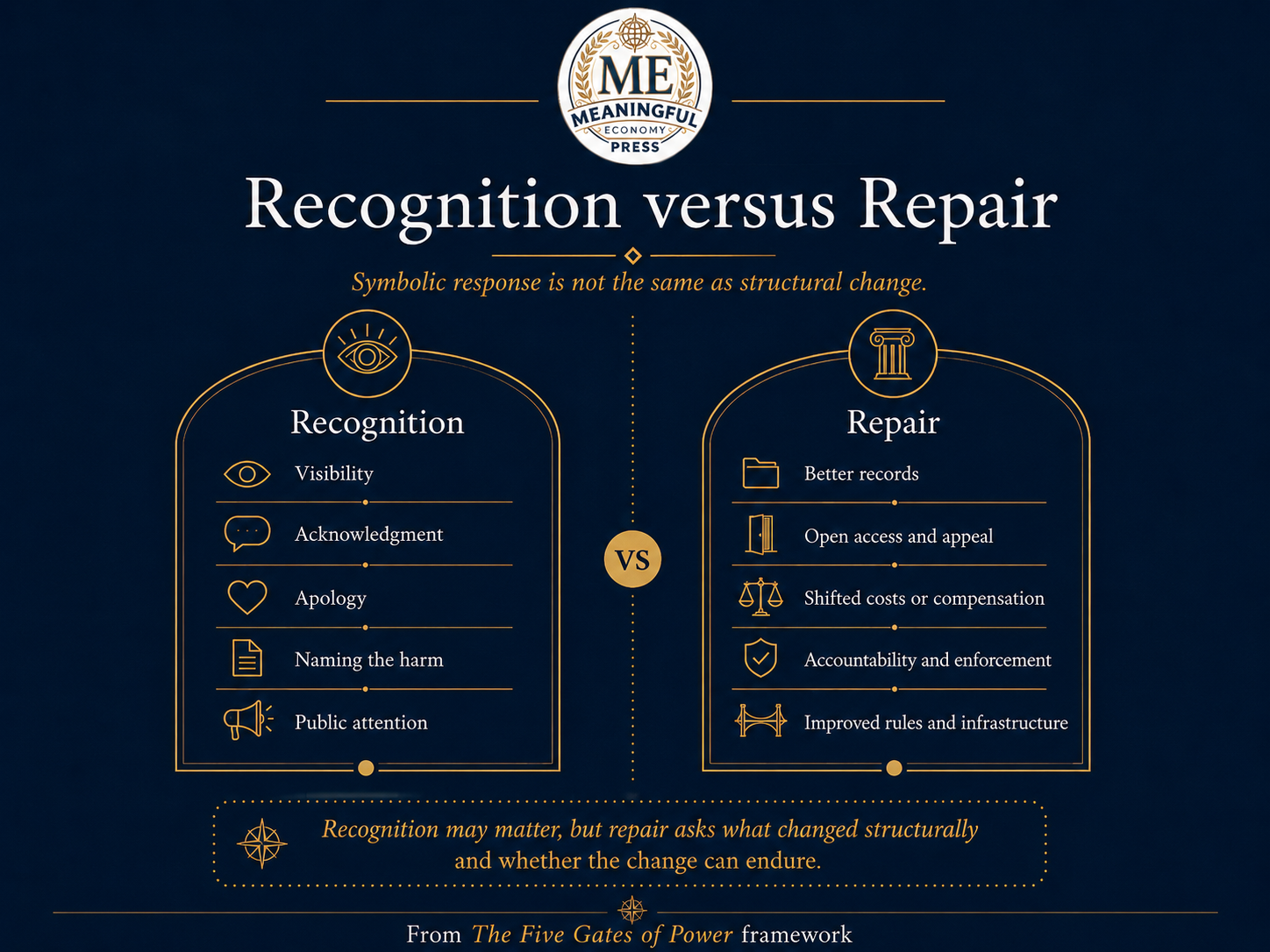
Diagram 5
Recognition versus Repair
Visibility, apology, and recognition may matter without changing the underlying structure. Repair asks what changed in records, access, costs, legitimacy, rules, enforcement, and infrastructure.
From the Five Gates of Power framework.
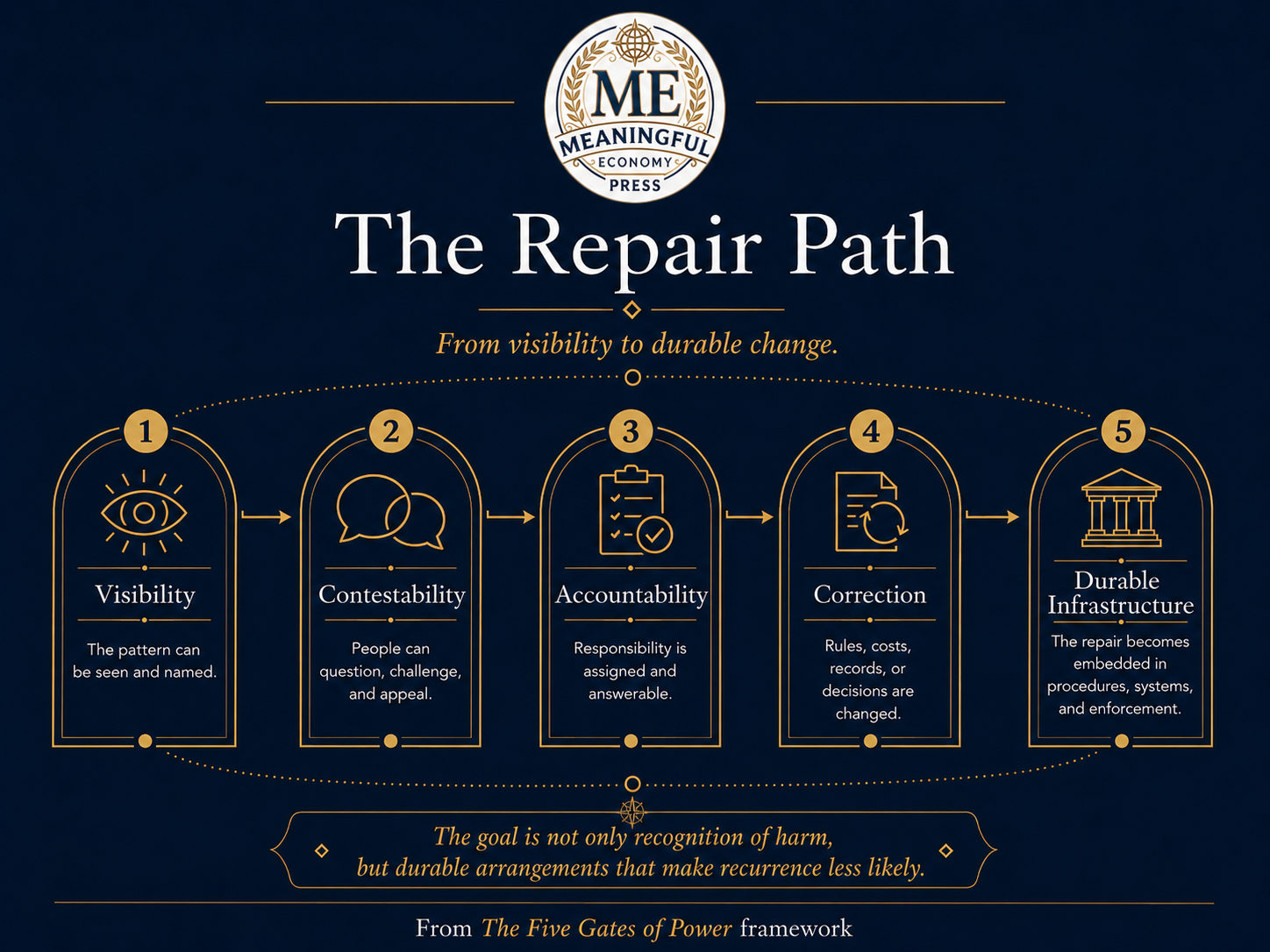
Diagram 6
The Repair Path
A repair path moves from visibility toward contestability, accountability, correction, and durable institutional change.
From the Five Gates of Power framework.
Explore the framework, questions, examples, and repair tools in The Five Gates of Power.
Explore the book →